Showing posts with label C1: Carbon Chemistry. Show all posts

Thursday, 24 January 2013

C1a Making Crude Oil Useful

You need to be able to:
  • Describe the composition of crude oil
  • Explain how the fractional distillation of crude oil works
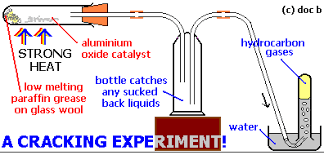
  • Explain the cracking of fractions

  1. Lots of notes on crude oil and making it useful
  2. doc b oil notesGCSE Notes from Doc Brown
  3. Videos and simulations on crude oil and its products
  4. Cracking crude oil notes


Wednesday, 23 January 2013

C1b Using Carbon Fuels

You need to be able to:

  • Evaluate fuels for a particular purpose
  • Explain the complete combustion of hydrocarbon fuels
  • Explain the incomplete combustion of hydrocarbon fuels
  1. Carbon monoxide build up.


Tuesday, 22 January 2013

C1c Clean Air

You need to be able to:

  • Describe the composition and formation of today's atmosphere
  • Explain why it is important to control atmospheric pollution
  • Describe how a catalytic converter works
  1. Drawing of part of Earth's surface, with water, oxygen, ozone and nitrogen in the atmosphere.Drawing of part of Earth's surface, with water, carbon dioxide, and ammonia molecules in atmosphere.Drawing of part of Earth's surface, with helium and hydrogen atoms in atmosphere, heading upward toward space.
  2. Atmospheric evolution from NASA
  3. BBC Bitesize notes 1 and 2
  4. The story of the catalytic converter by BASF


Monday, 21 January 2013

C1d Making Polymers

You need to be able to:
  • Describe saturated and unsaturated hydrocarbons
  • Explain how to make an addition polymer


  1. Monomer to polymer interactive model
  2. What, you guys again?!

Sunday, 20 January 2013

C1e Designer Polymers

You need to be able to:
  • Explain links between polymer properties and uses
  • Explain properties of Gore-Tex(R) and nylon
  • Explain issues with the use of polymers
  1. Designer polymers notes from the BBC (look at all 4 pages)
  2. Examples of designer polymers and issues with polymers


Saturday, 19 January 2013

C1f Food

You need to be able to
  • Explain what cooking does to foods and why this makes them easier to digest
  • Explain the action of emulsifiers
  • Construct balanced equations showing how baking powder (sodium hydrogen carbonate) works, and how you can test for the gas made
  1. Kitchen Science - eggs
  2. Flash emulsifier simulation
  3. Baking powder chemistry from the BBC

Friday, 18 January 2013

C1g Smells

You need to be able to
  • Describe and explain the formation and properties of esters in synthetic perfumes
  • Explain how esters can be used as solvents (or why water won't remove nail polish)
  • Explain the need to test cosmetics, and opinions surrounding testing on animals
  1. Esters notes from BBC Bitesize
  2. Soluble and insoluble materials BBC clip
  3. Cosmetics testing notes

Thursday, 17 January 2013

C1h Paints and Pigments

You need to be able to:
  • Describe the ingredients in and explain the structure of paints (colloids)
  • Explain how oil pains and how emulsion paints dry
  • Describe and explain the uses of thermochromatic and phosphorescent pigments
  1. Paints and pigments notes from Bitesize
  2. Paints video...

  3. And another...

  4. Watching paint dry animation and notes